TRACES
Participatory Installation
Unity3D, Azure Kinect
Created by whatsoftdata, a collaborative collective.
Role: Conceptual lead, system design, interaction logic
Traces (2022) reimagines the guestbook as a living ecosystem. Humans are themselves composed of dynamic internal ecologies—microbial worlds shaped by food, environment, medication, and, most importantly, the people with whom we interact. Extending this logic to space, the work asks how human beings fit into a site: if a site is understood as a living organism, does each visitor become a kind of cell within it?
Conceptually rooted in the microbiome as a model of intimacy, Traces treats participation as a form of cohabitation rather than expression. Individual actions are not isolated gestures, but contributions to a shared environment that grows, shifts, and reorganizes over time. Like a guestbook without names or messages, the work records presence without capturing identity, allowing visitors to sense that others have been here without knowing who they were.
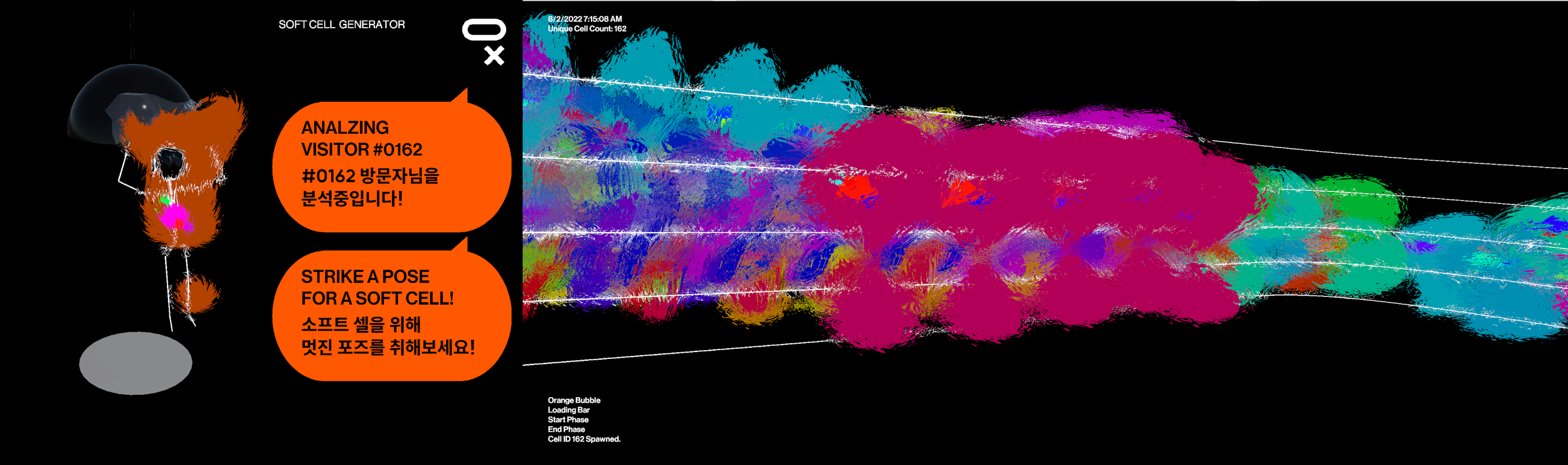
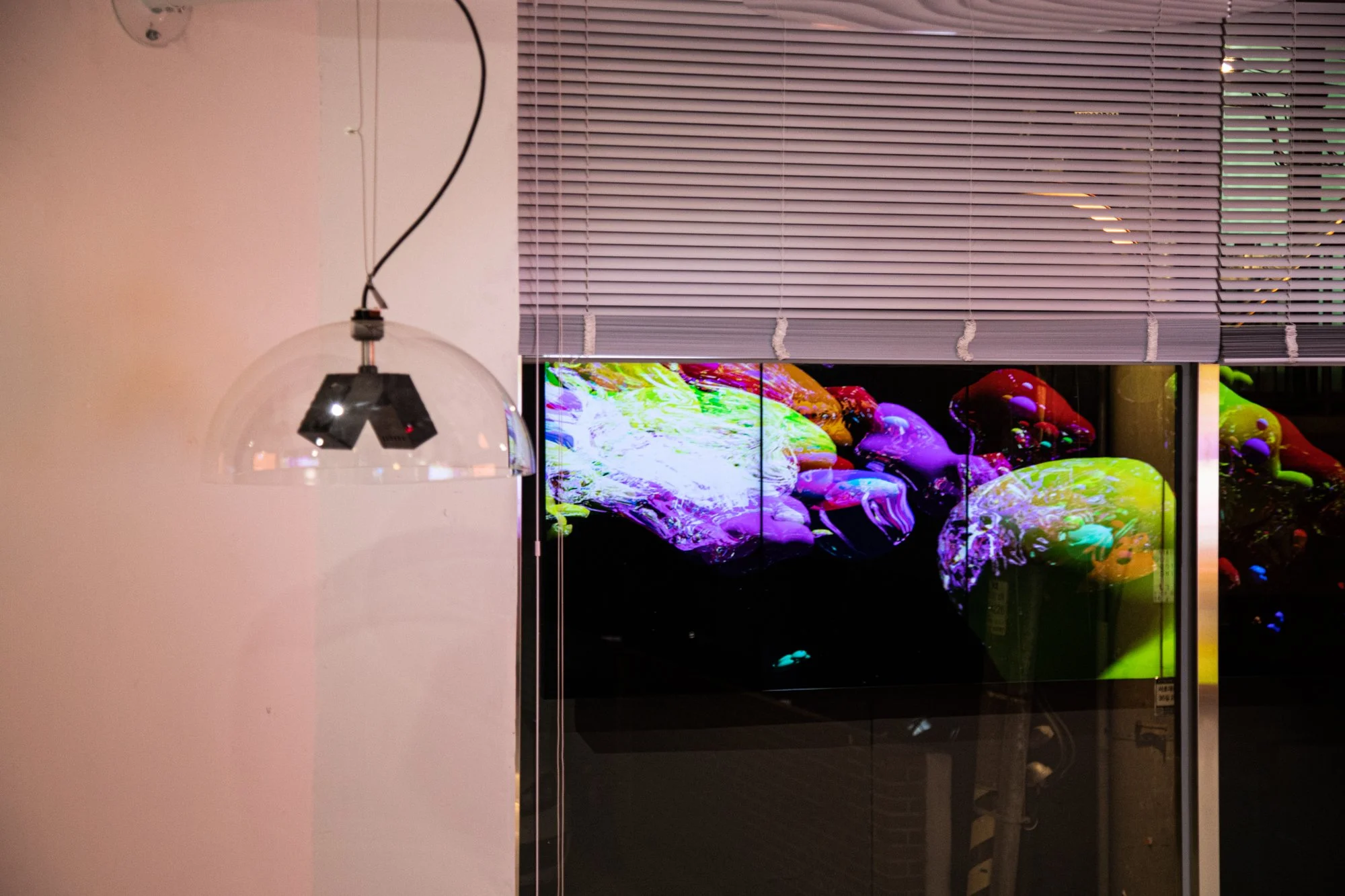
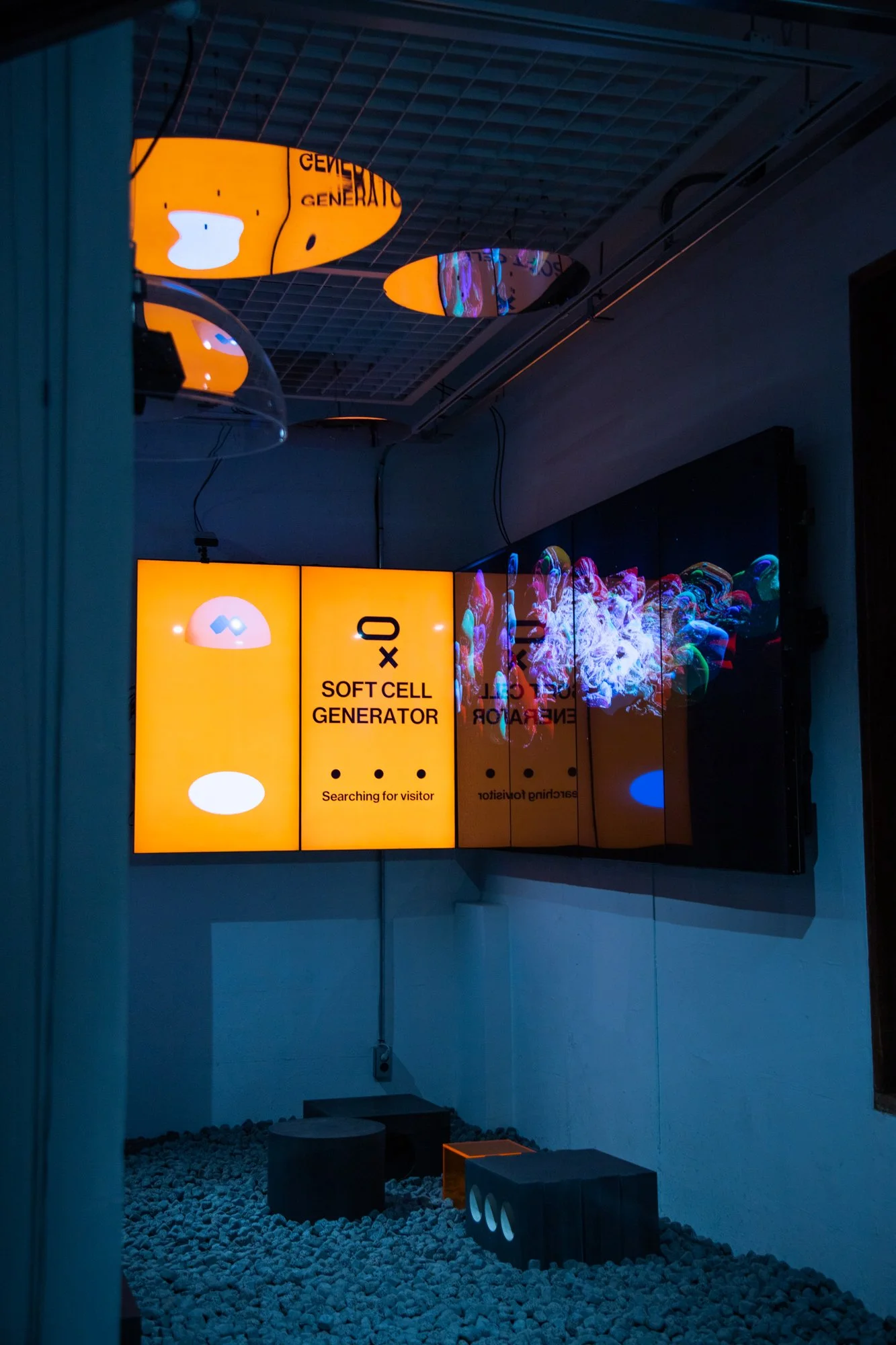
When a visitor enters the sensing zone beneath a sound dome, their bodily presence is detected and a digital entity—referred to as a Soft Cell—is generated. Each Soft Cell functions as a trace of embodied engagement, shaped by posture, movement, and sustained presence. Rather than representing a person directly, these entities persist in the space after a visitor leaves, interacting with others and becoming part of a collective organism.
Time operates as a measure of spatial intimacy within the system. The longer a visitor remains within the sensing zone, the more Soft Cells they contribute, allowing duration and attentiveness to register materially. As Soft Cells accumulate, they begin to interact visually and sonically, forming a shared audiovisual environment that evolves through repeated participation.
Over time, Traces becomes a record not of individual identities, but of shared occupation and sustained presence. Meaning emerges through accumulation and relational behavior, as the system quietly registers how bodies inhabit, linger within, and shape a site together.
Interaction Logic
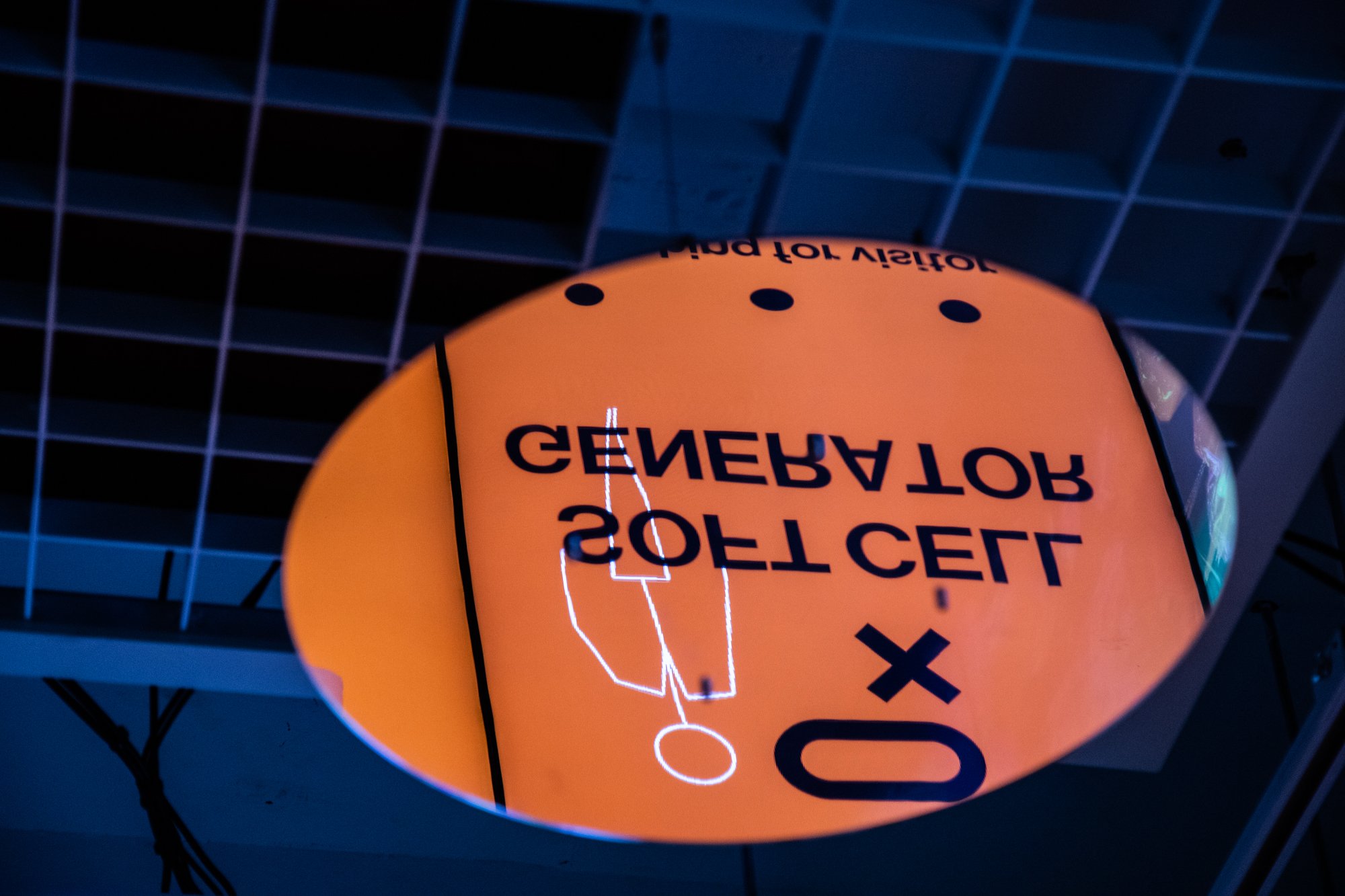
Participation is initiated when a visitor enters the sensing zone beneath the sound dome.
Bodily presence, posture, and movement are translated into a digital entity referred to as a Soft Cell.
Each Soft Cell carries a unique sonic component, contributing to a shared soundscape.
Time functions as a measure of spatial intimacy: remaining longer within the sensing zone produces additional Soft Cells.
Soft Cells persist after a visitor leaves, accumulating and interacting with others to form an evolving collective ecosystem.