Threshold — A Synesthetic Adjoining
Interactive Spatial Installation
Light · Air · Scent · Mechanical Interaction
Created by whatsoftdata, a collaborative collective.
Role: Co-conceptualization, spatial system design, physical implementation

“The house shelters daydreaming, the house protects the dreamer, the house allows one to dream in peace.”
— Gaston Bachelard, The Poetics of Space
A threshold is a point of transition—a line of wood, metal, or stone that simultaneously joins and separates. It marks the moment when one state spills into another: when something fills, accumulates, and exceeds its limit, triggering a shift in atmosphere, perception, or behavior. A threshold belongs fully to neither side. It is a spatial and perceptual in-between.
Threshold (2022) is an interactive, multisensory installation developed within a former residential house located inside a redevelopment zone, operating under conditions of impermanence and imminent transformation. The project reinterprets the house’s intersecting frames and layered structures as a space already in transition—where architectural boundaries, domestic histories, and lived routines are provisional and unsettled.
Crossing an air curtain that marks a sensory boundary, visitors enter a room filled with scent. Crafted to evoke older domestic interiors, the scent operates as a mnemonic trigger, recalling lived spaces that resist precise placement in time. Memory is activated through synesthetic adjoining: scent, light, touch, and movement converge to produce recognition without certainty.
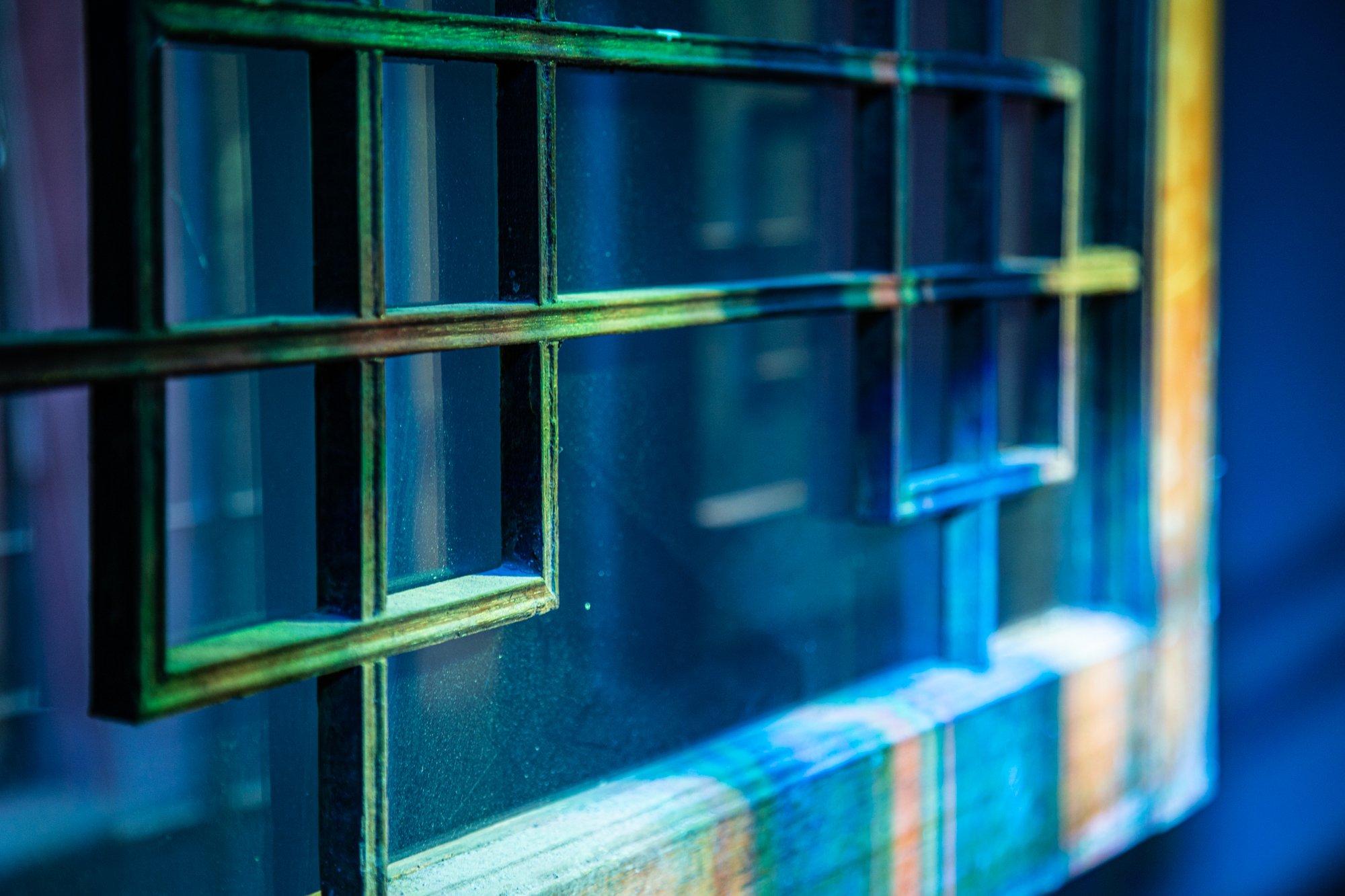
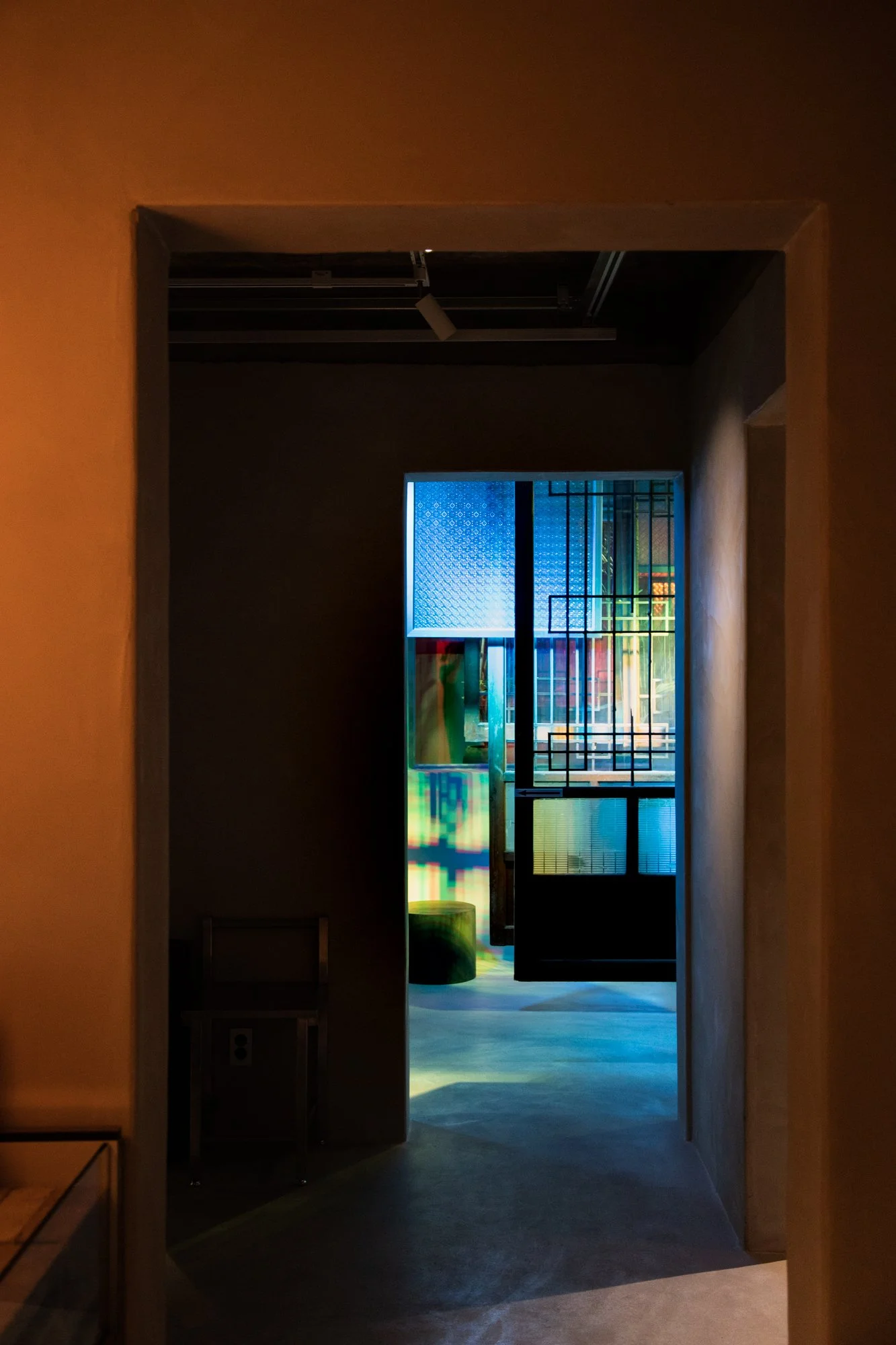
The room is populated by the house’s former doors and windows. Once static elements that divided interior spaces, framed views, or marked points of passage, these architectural fragments have been displaced from their original locations. Visitors can push, pull, and slide the doors and windows laterally along ceiling-mounted rails, subtly reshaping the room’s configuration. As elements shift, circulation paths narrow or open, sightlines align or break, and the boundaries between inside and outside are continually renegotiated.
Patterned glass and wooden frames filter incoming light, casting moving shadows that accumulate across the space. From a distance, the installation reads as a luminous diorama, washed in layered light and shadow. From within, each adjustment reframes the exterior view, producing a diorama within a diorama—a world nested inside another world.
Threshold stages memory as an atmospheric condition that emerges through bodily negotiation. The familiar warmth of scent, the resistance of sliding wood and glass, and the shifting interplay of light invite visitors into a space that is at once real and remembered. Interior and exterior, present and past, solidity and illusion remain in flux, offering a temporary passage into a space defined by ongoing transition.